Auditable by design: TROPIC01 inside Trezor Safe 7
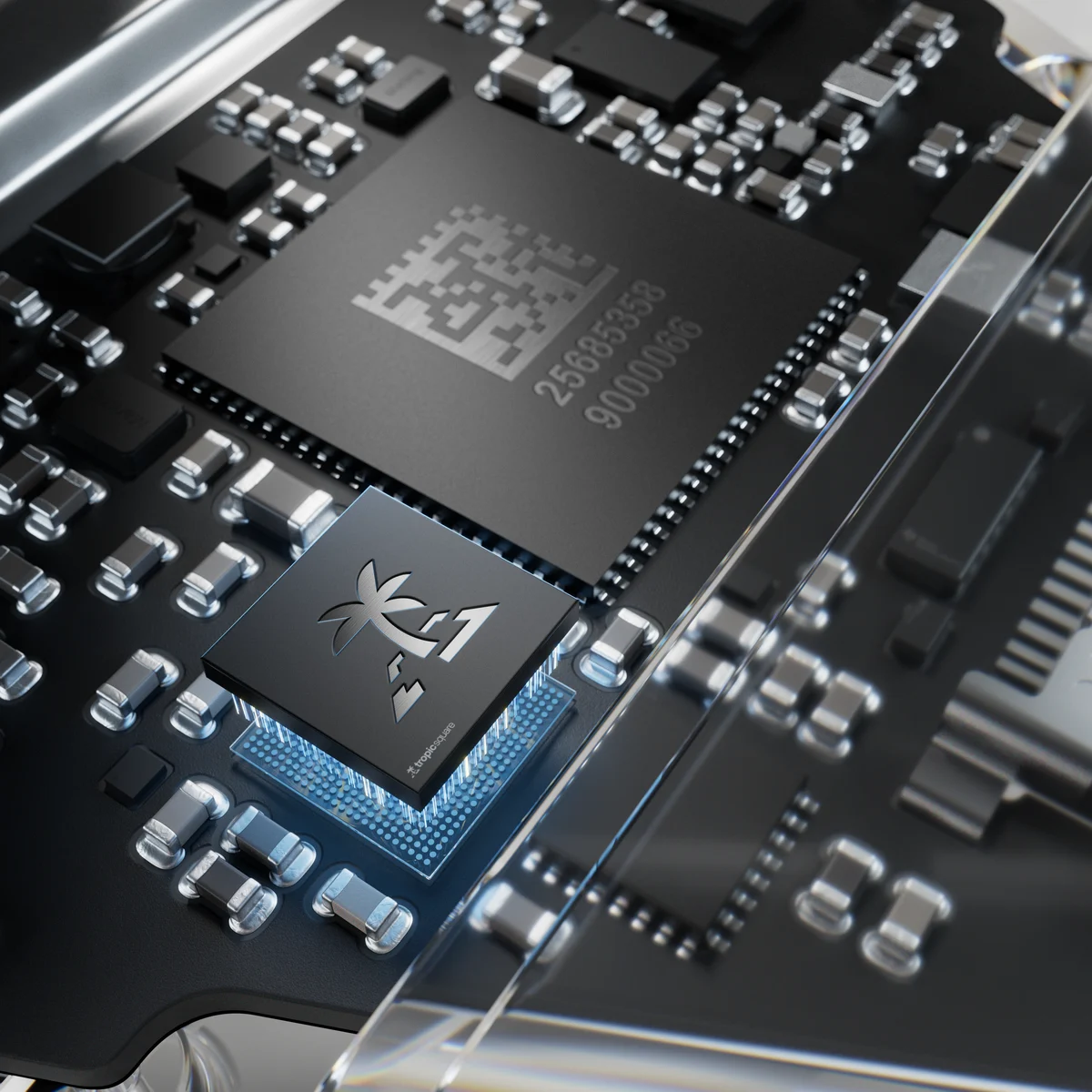
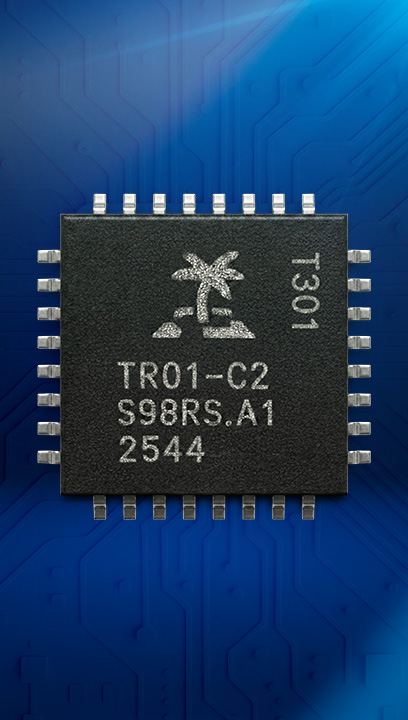
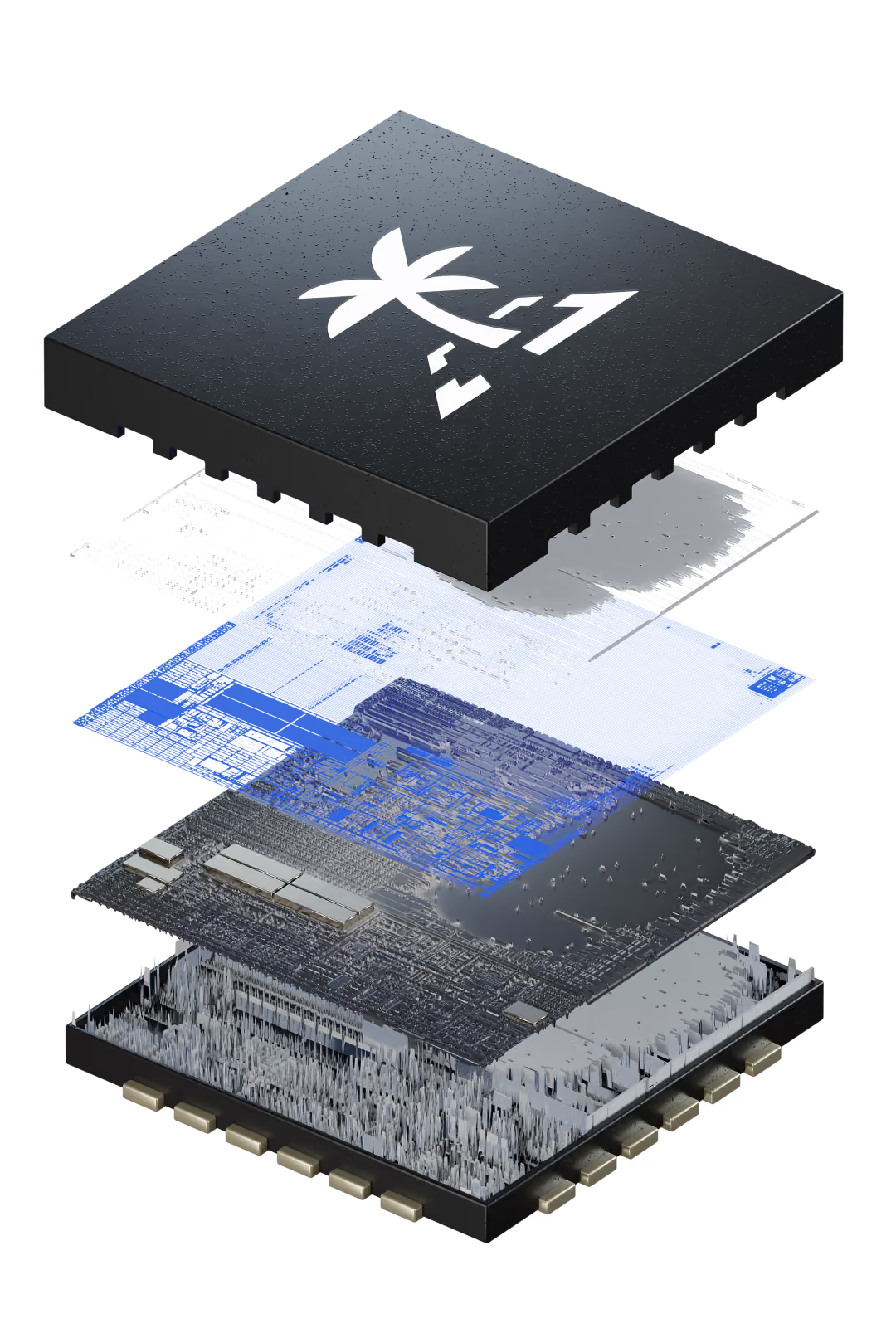
Trezor’s engineers once found a flaw in a secure chip and weren’t allowed to talk about it. Trezor Safe 7 now includes TROPIC01, a secure element published for audit, as part of its PIN protection mechanics.
Where it started
Hardware wallets keep cryptocurrency users’ keys offline and sign transactions on the device. That handles remote attacks. Physical access is a different problem: an attacker in a lab can glitch PIN counters, probe debug interfaces, or steal keys through side-channel analysis.
Trezor publishes its firmware and designs under open source. When its users asked for a secure element, that created a conflict. The chip guarding the PIN would be the one part of the device Trezor couldn’t discuss in public.
The conflict wasn’t hypothetical. Years earlier, while prototyping with a vendor’s secure chip, Trezor engineers found a vulnerability, and an NDA they signed to start working with the chip meant they couldn’t disclose it or consult outside experts. Tropic Square was founded in Prague in 2020 out of that experience, to build a secure element whose design is published for audit.
The PIN problem behind MAC-and-Destroy
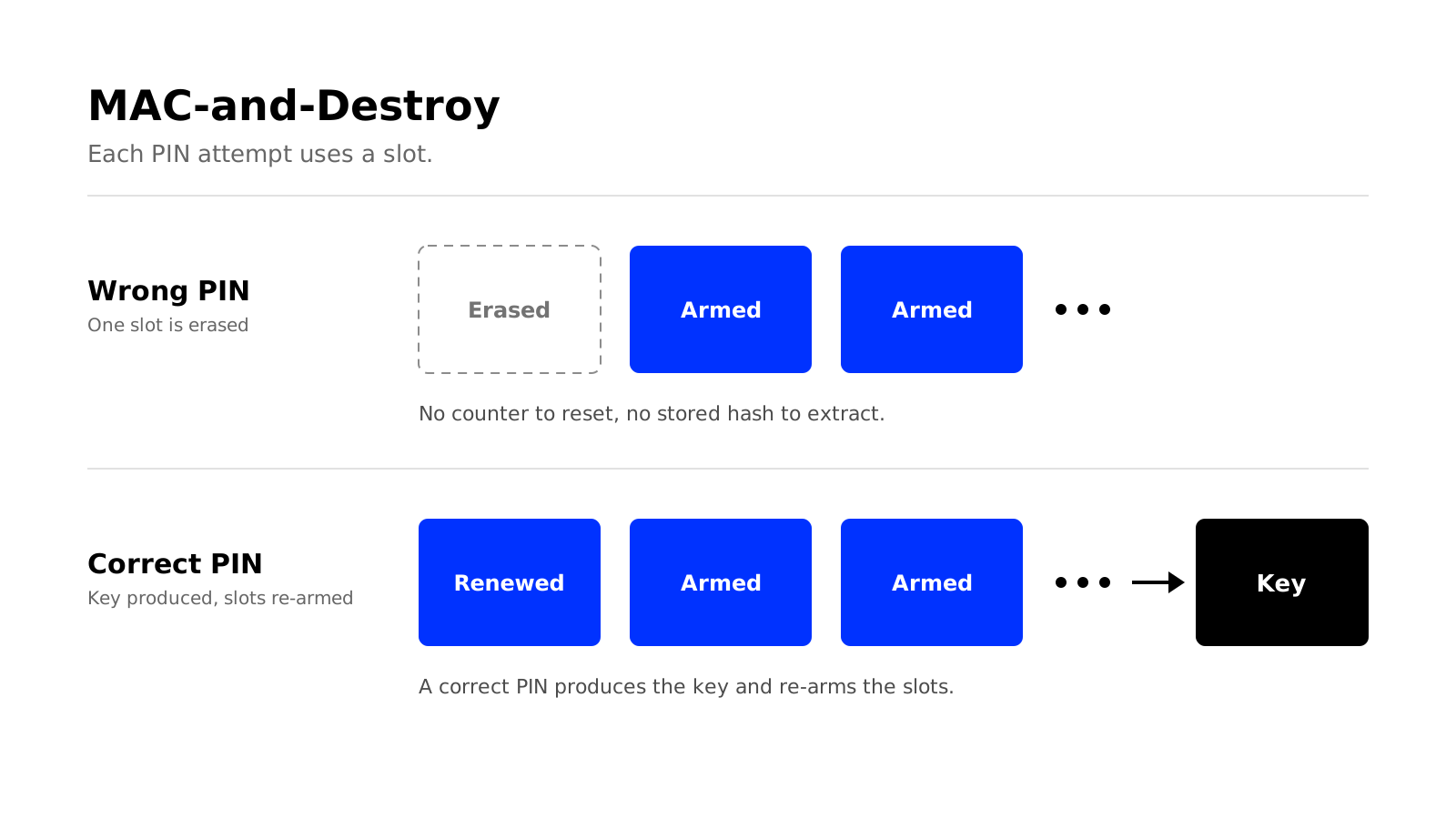
Most PIN checks compare the input with a stored value and count failed attempts, and both are known targets for fault injection. MAC-and-Destroy, part of Trezor’s needs for Trezor Safe 7, is TROPIC01’s patent-pending answer, shipping in every chip.
MAC-and-Destroy works differently: each attempt wipes a slot, so there is no counter to reset and no stored hash to extract. In Trezor Safe 7, Trezor’s open-source firmware assigns a slot to each PIN attempt and re-arms the slots when correct PIN entry occurs (tropic.c, storage.c).

Openness, within limits
Trezor publishes its firmware and hardware designs under open source, so anyone can read the code that guards a Trezor Safe 7’s keys. Its secure element had to fit that: TROPIC01’s PIN scheme, API and Trezor’s integration code are all public. TROPIC01 is auditable, not fully open: it relies on licensed IP such as the TRNG and the PUF, and states what isn’t published. The result is an integration that outside reviewers can check from the PIN scheme through to the firmware, with its limits stated openly.
Trezor’s users don’t take security on trust, and with TROPIC01 they don’t have to. Trezor’s firmware is open source, so anyone can see exactly how it uses TROPIC01, down to the trade-offs it made for its own hardware. The same applies when the people checking are your customers, reviewing the components in your design.
Three independent layers
Trezor pairs two secure elements as risk management, so Trezor Safe 7 doesn’t depend on any single chip. Not every threat model needs that, but a design team can take the same approach in its own device.
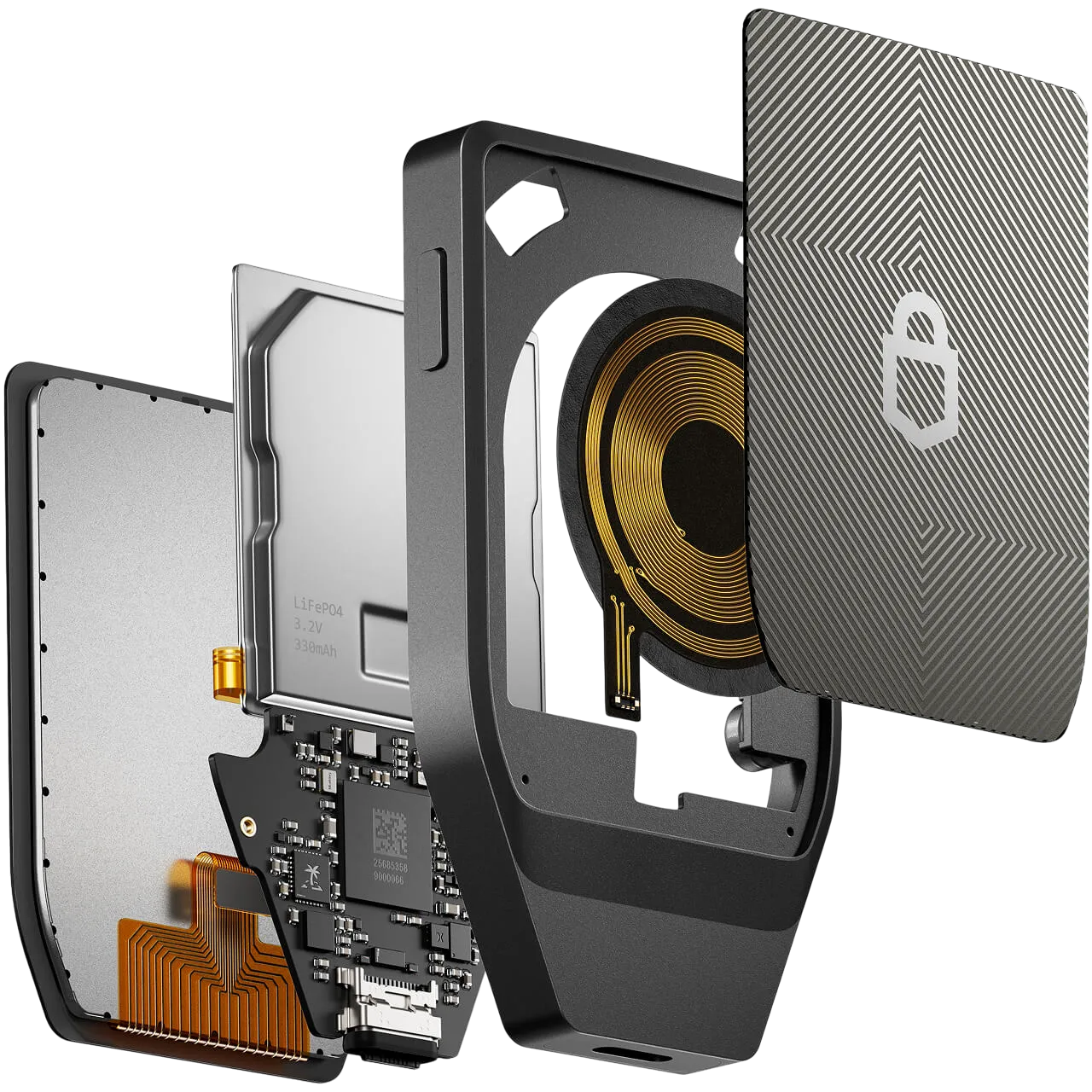
“We use TROPIC01 in the Trezor Safe 7 wallet to verify authenticity and to encrypt the seed against the PIN. The seed is not stored in any SE; it is encrypted in the main MCU using a key from Tropic Square and Optiga. An attacker would need to compromise all three independent layers to reach it.”

Tomáš Sušánka
What TROPIC01 does in Trezor Safe 7
TROPIC01’s features map well to the needs of EV charging stations in high exposure sites with little to no monitoring and surveillance.

PIN protection
Each PIN attempt consumes a slot inside the chip, and only the correct PIN produces a valid cryptographic result. With no counter or stored hash to attack, there’s nothing to reset or extract.

Authenticity verification
Certificates provisioned during manufacturing let TROPIC01 prove the device is genuine through signed challenge-response. A cloned or swapped part fails, and the protocol is in the public User API.

Secure randomness
A hardware TRNG supplies entropy when the wallet is created.

Physical attack resistance
Sensors detect voltage glitching, laser and EM pulses, and temperature manipulation. An active shield covers memory, and masking and reshuffling of internal computations resist side-channel analysis.
What ships in every TROPIC01
Everything Trezor built on ships with every TROPIC01: MAC-and-Destroy, the public datasheet and User API, the libtropic SDK, and Trezor Safe 7’s integration in Trezor’s open-source firmware as a working reference. You can do what Trezor did in a comparable device; embedded engineers can start in DevZone.
Evaluate the PIN scheme Trezor Safe 7 uses
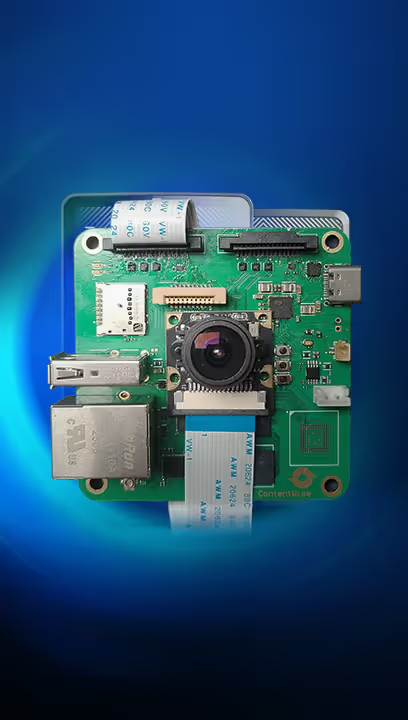
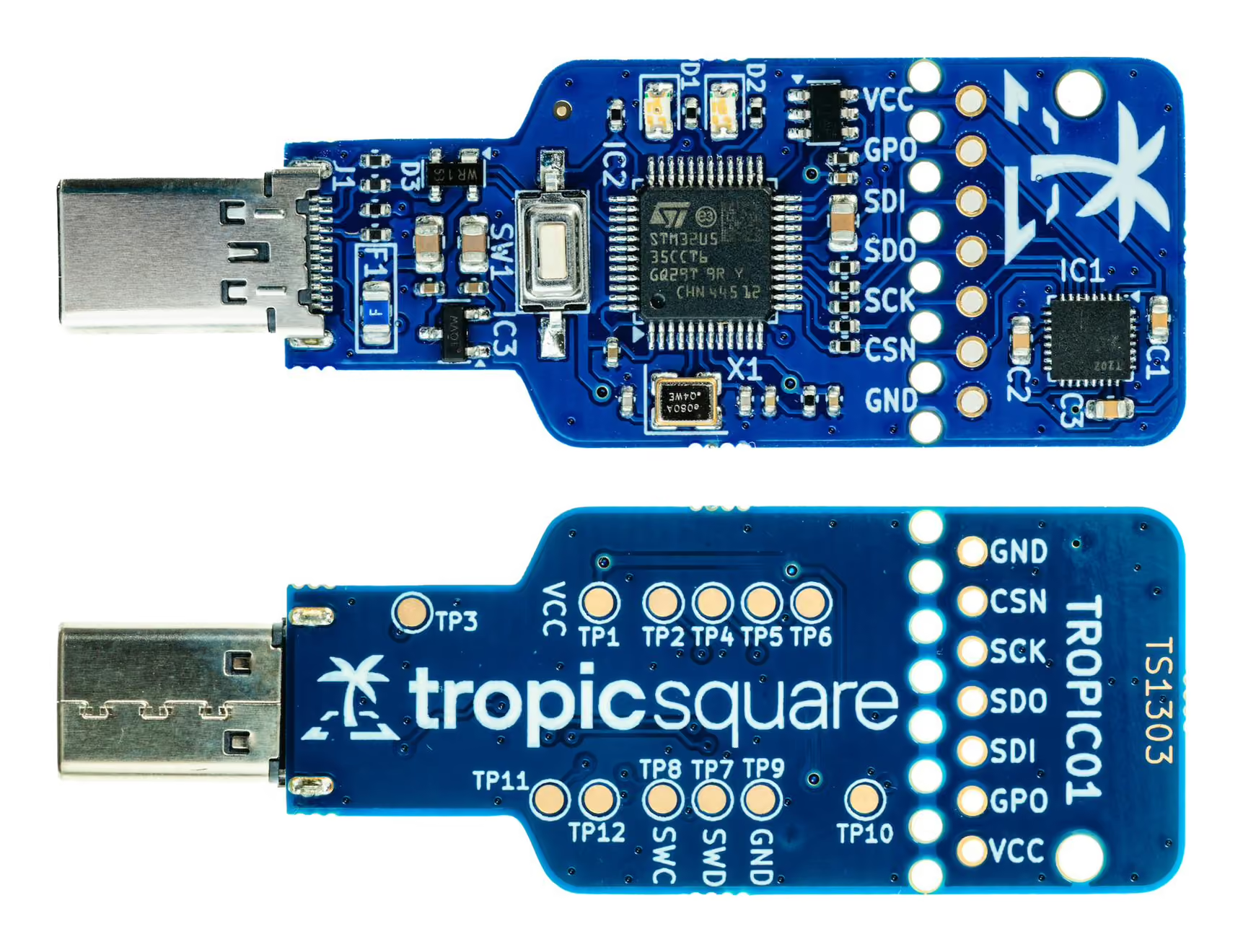
Run MAC-and-Destroy on your own bench with a devkit, or bring your device architecture to a call with our engineers.